
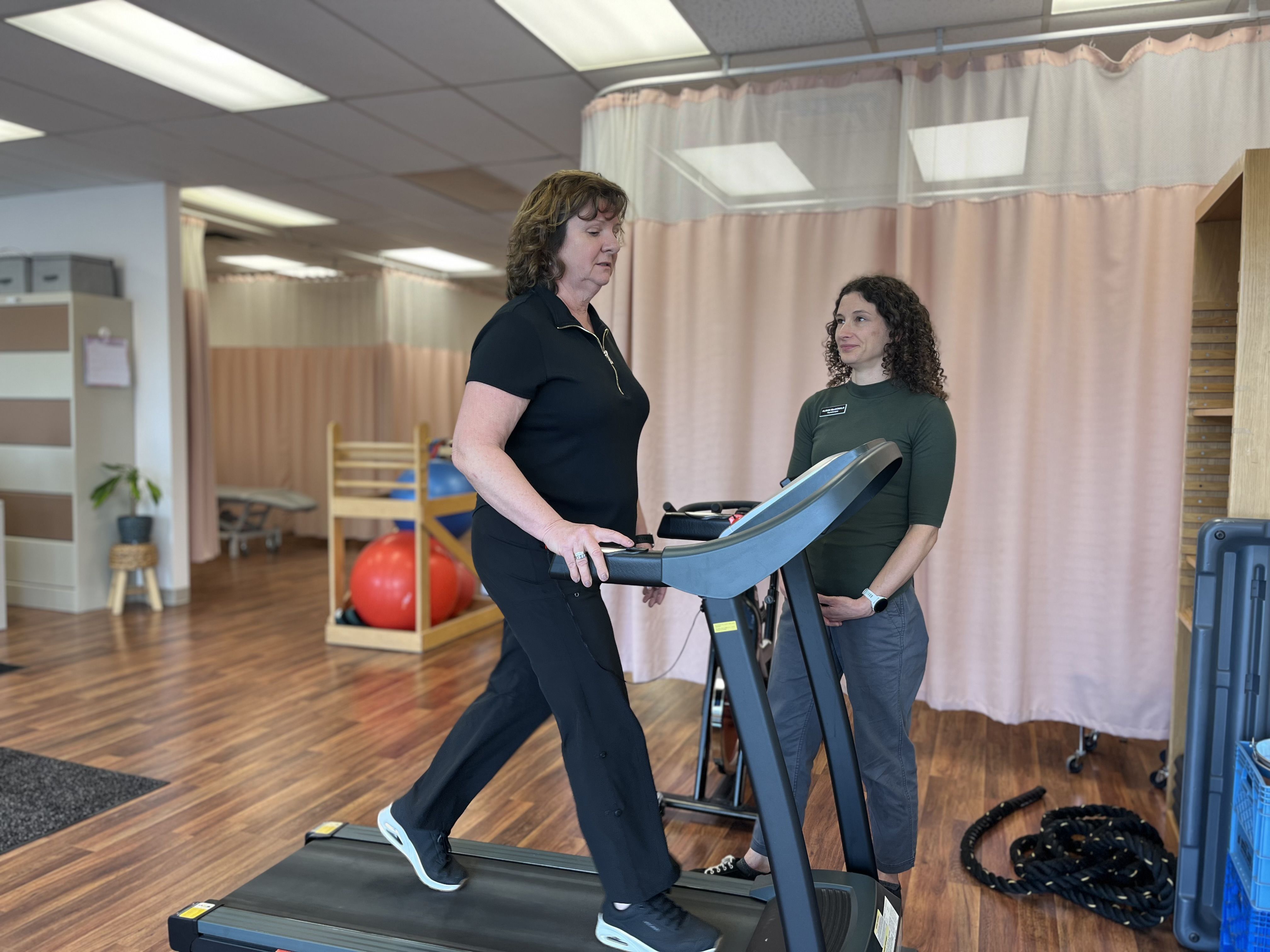
KHSC Patient Terri Swain-Collins participated in the exercise program as part of the clinical trial.
A new study led by researchers in Kingston shows that a structured exercise program for people recovering from colon cancer can help them live longer—and also reduces costs for the health care system.
The study was led by researchers from Kingston Health Sciences Centre (KHSC), Queen’s University, and the Canadian Cancer Trials Group (CCTG). Findings were presented this week at a major international cancer conference and published in a leading medical journal.
Exercise as part of recovery
The research looked at people who had completed chemotherapy for colon cancer. Participants followed a structured exercise program over three years, supported by trained fitness professionals.
The study found that people who took part in the exercise program:
- Had better long-term survival outcomes,
- Were less likely to have their cancer return and,
- Required less future cancer treatment
Lower costs for the health system
Researchers also examined the cost of offering this type of structured exercise program.
The total cost of the exercise program itself is about $3,000 per person over three years. This includes regular sessions with trained exercise specialists—every two weeks in the first year and monthly in the following two years.
Compared to the high cost of many cancer treatments which can run in the neighborhood of hundreds of thousands of dollars, this is relatively low-cost initiative which could have a significant impact on patient care. In fact, because fewer patients will need further treatment after participating in the program, the study found the program actually saves money overall.
A simple approach with big impact
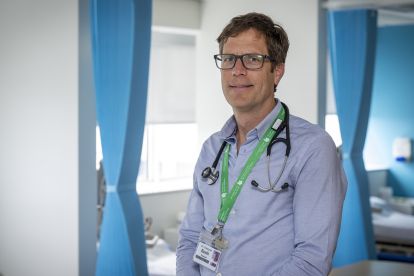
“This study shows that exercise is not just good for patients’ health—it can also reduce pressure on the health care system,” said Dr. Christopher Booth, a Kingston-based cancer specialist at KHSC and Professor at Queen’s University. “It’s rare to see something that both improves survival and lowers costs.”
Researchers say the findings highlight the importance of making exercise part of standard cancer care—not just something that’s an optional treatment.
Local research making a difference
The work reflects a strong collaboration between KHSC, Queen’s University, and CCTG, with Kingston playing a leading role in advancing cancer care research around the globe.
“This is a great example of local research making a real difference for patients,” said Dr. Booth. “We now need to ensure programs like this are available to people as part of the routine standard of care prescribed by medical teams.”
For participants, the program also made a meaningful difference in daily life.
Terri Swain-Collins, a Kingstonian who took part in the study, says working with a trainer helped her build healthy habits that lasted. “The program gave me structure and support,” she said. “It showed me that exercise can be simple, manageable, and really beneficial.”